AI did not kill the engineer — it forced every engineer to become a product engineer. Why the biggest career shift in a generation is already underway.
Product Engineers Are Eating the World
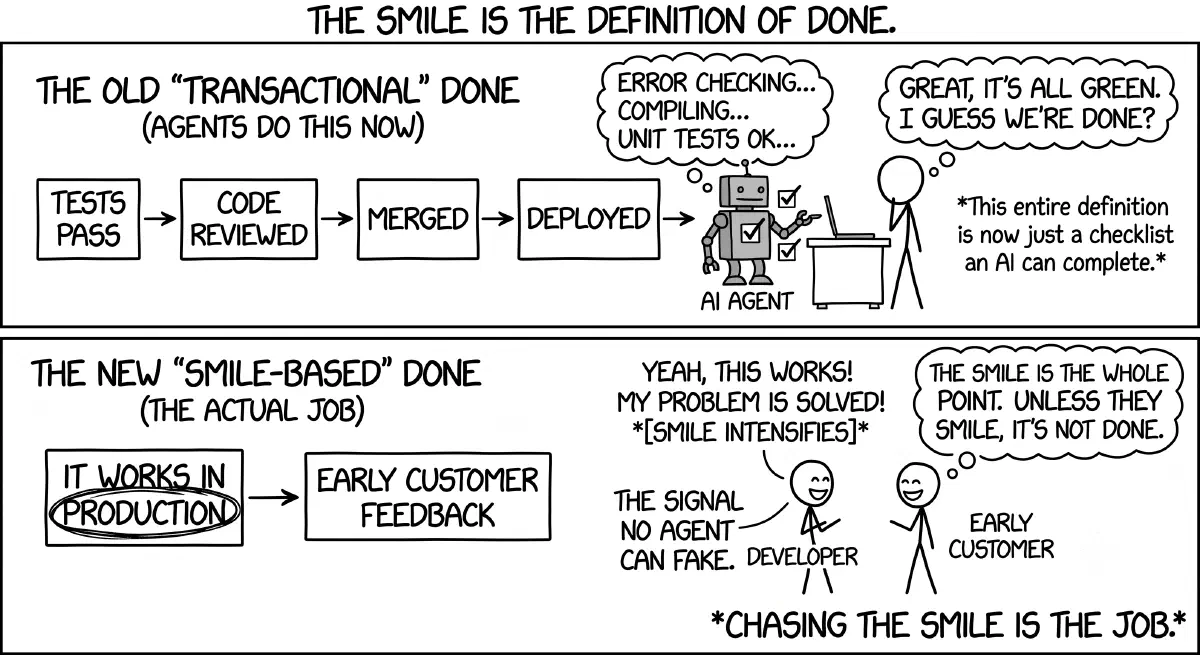
AI did not kill the engineer — it forced every engineer to become a product engineer. Why the biggest career shift in a generation is already underway.

“There is a secret bond between slowness and memory, between speed and forgetting. A man is walking down the street. At a certain moment, he tries to recall something, but the recollection escapes him. Automatically, he slows down. […] The degree of slowness is directly proportional to the intensity of memory; the degree of speed is directly proportional to the intensity of forgetting.” — Milan Kundera, Slowness1
In a previous post I argued that AI has decoupled doing from learning. This one is about a related but older problem. Speed does not merely prevent memory from forming. Speed actively erases it. And this was true long before AI.
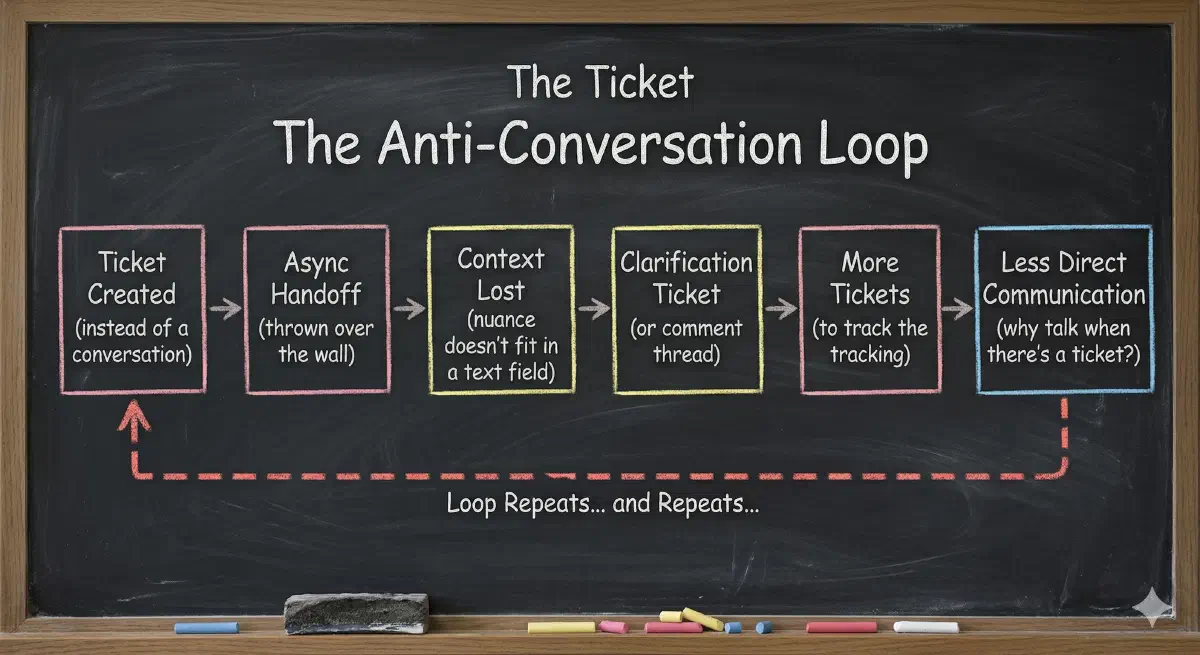
If your team spends most of its time managing a ticketing system — filing requests, triaging queues, waiting for answers — you have already made your collaboration legible to a machine.
That is not a metaphor. Ticketing systems only work for the kind of work AI handles well: routine, well-defined, known destination, repeatable process. If your collaboration looks like a queue, it can be automated. And it will be.

AI decoupled doing from learning. Every knowledge worker now faces a constant trade-off between the two. The ones who choose learning look slower today and become irreplaceable tomorrow.
AI accelerates the Peter’s Principle by letting people produce senior-level output without building senior-level understanding — creating a new class of ‘Senior Operators’ who have mastered the interface, not the craft.

Your p50 time-to-production is the single most predictive metric of developer happiness, value delivery, and organizational health.
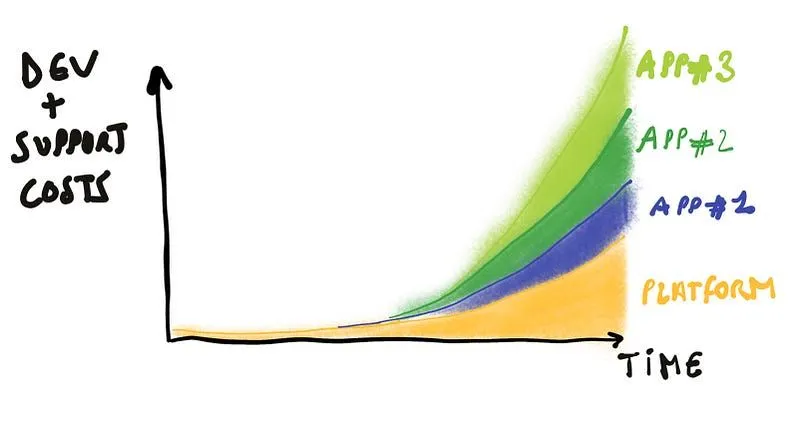
Tech debt is often misused as a magic incantation to prioritize engineering work. A classification and root-cause analysis of how tech debt is abused.
How GraphQL schema stitching solves the complexity of multiple REST APIs. A platform product manager’s perspective on API strategy.

Platforms are more complex than products. Part 2 of 5 explores the specific domains where platform product managers face increased complexity.