AI did not kill the engineer — it forced every engineer to become a product engineer. Why the biggest career shift in a generation is already underway.
Product Engineers Are Eating the World
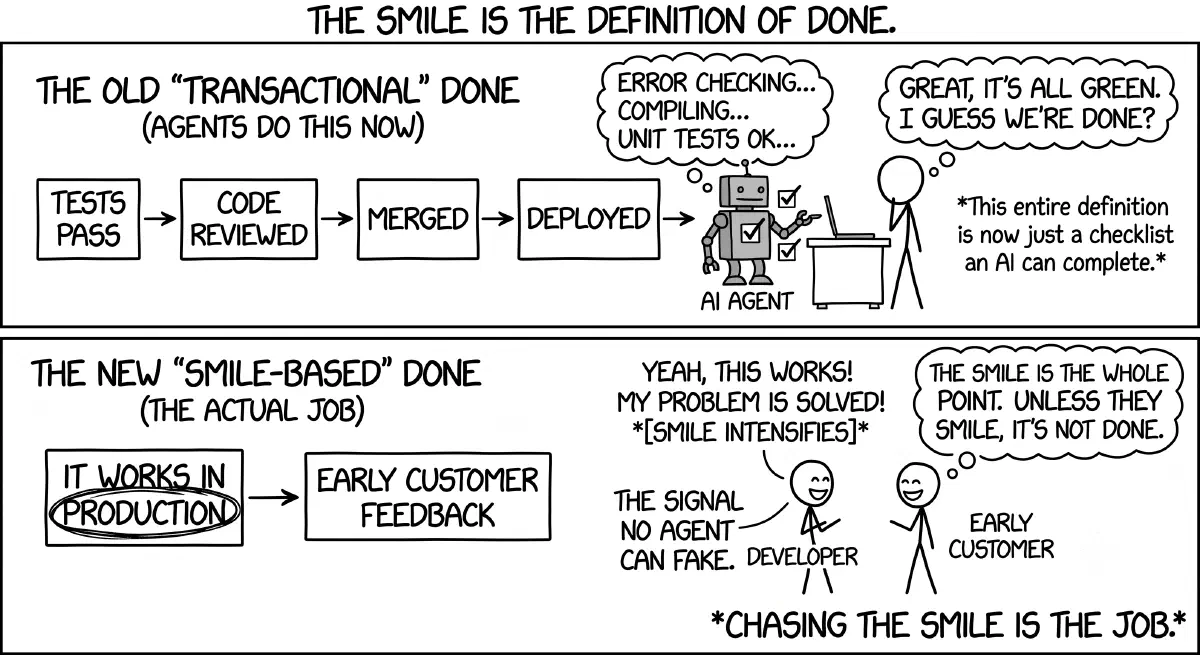
AI did not kill the engineer — it forced every engineer to become a product engineer. Why the biggest career shift in a generation is already underway.
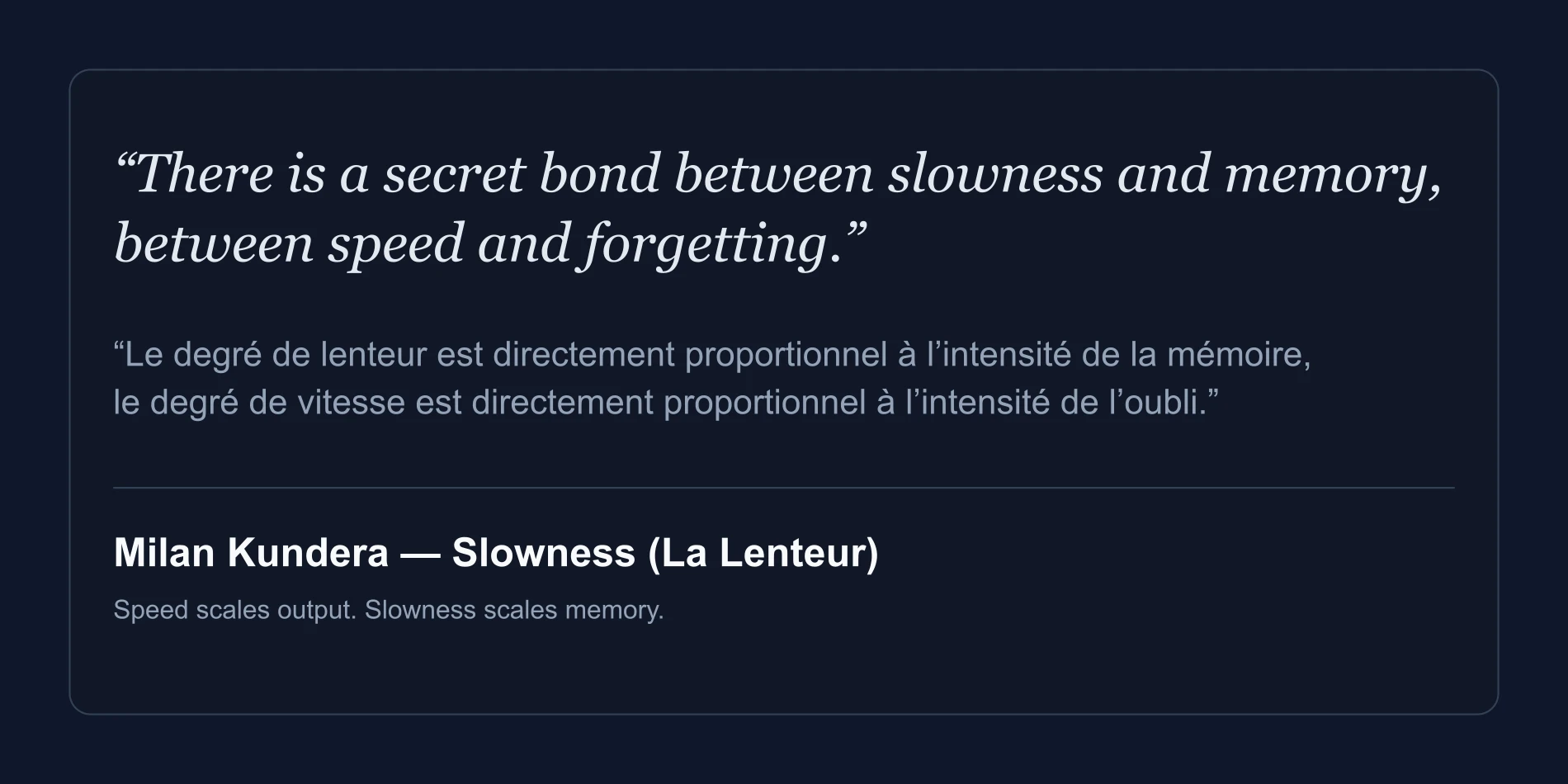
“There is a secret bond between slowness and memory, between speed and forgetting. A man is walking down the street. At a certain moment, he tries to recall something, but the recollection escapes him. Automatically, he slows down. […] The degree of slowness is directly proportional to the intensity of memory; the degree of speed is directly proportional to the intensity of forgetting.” — Milan Kundera, Slowness1
In a previous post I argued that AI has decoupled doing from learning. This one is about a related but older problem. Speed does not merely prevent memory from forming. Speed actively erases it. And this was true long before AI.
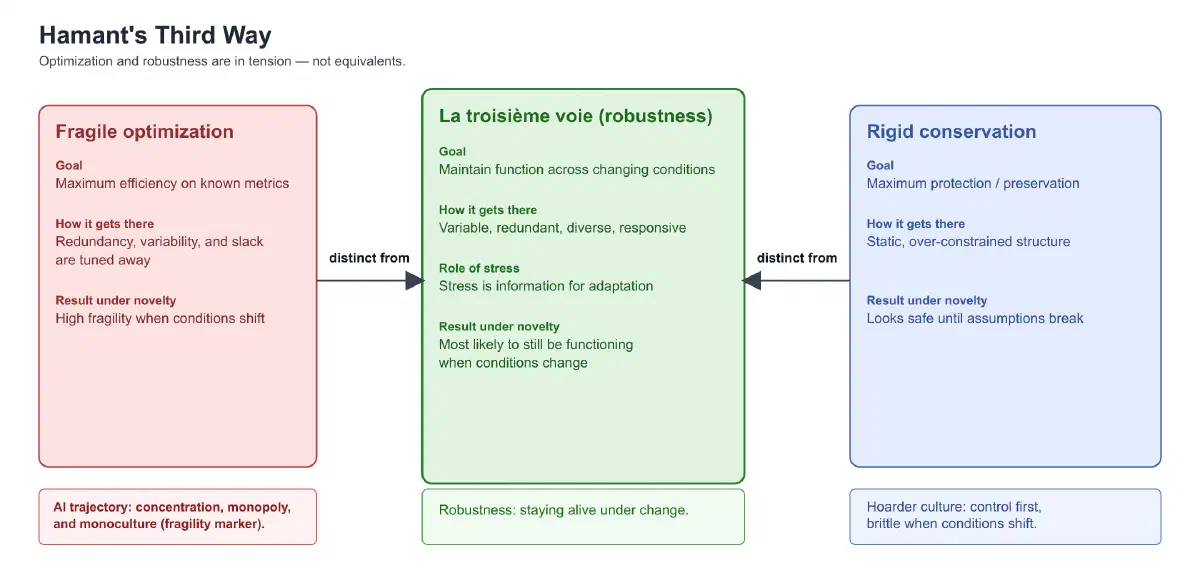
The AI ecosystem contains genuine robustness signals. It is also being systematically pushed toward fragility by the optimization logic of the installation period. Through Olivier Hamant’s biological framework, a path toward cognitive independence — for individuals, organizations, and states — becomes visible. It requires treating open infrastructure as a commons, ownership as a political act, and digital sovereignty as a precondition for everything else.
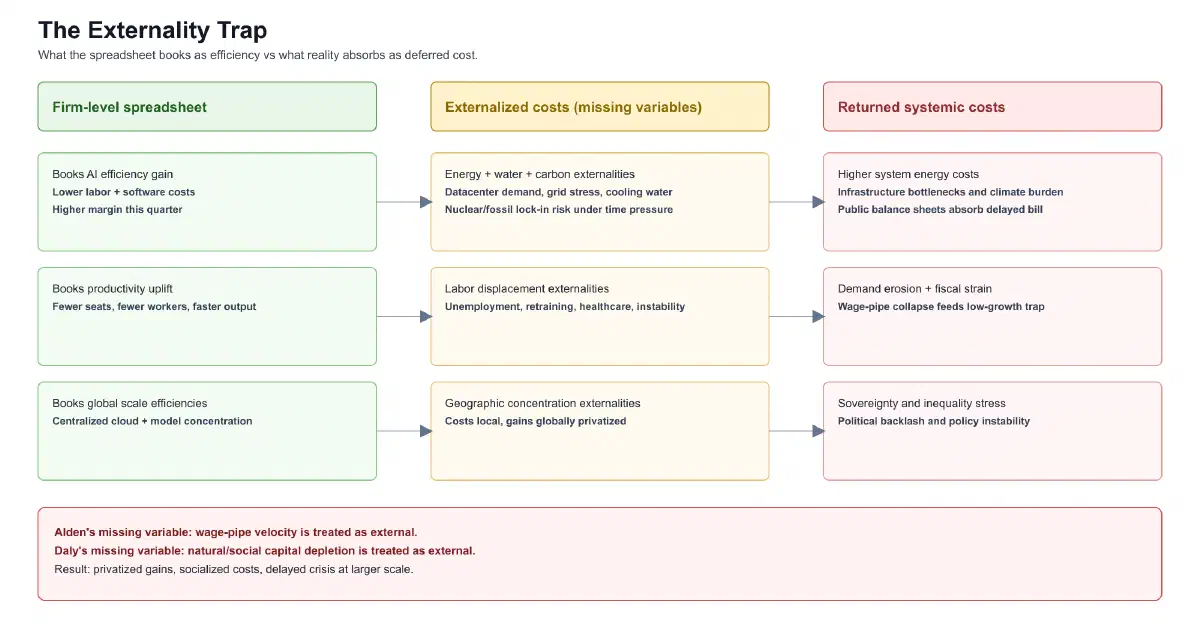
AI is replacing inefficiencies at speed. The workers it displaces stop consuming. Through Lyn Alden’s monetary lens, this is not a recession — it is a structural demand void. And through the planetary lens, it may be the forced degrowth humanity needs, arriving in the worst possible way.
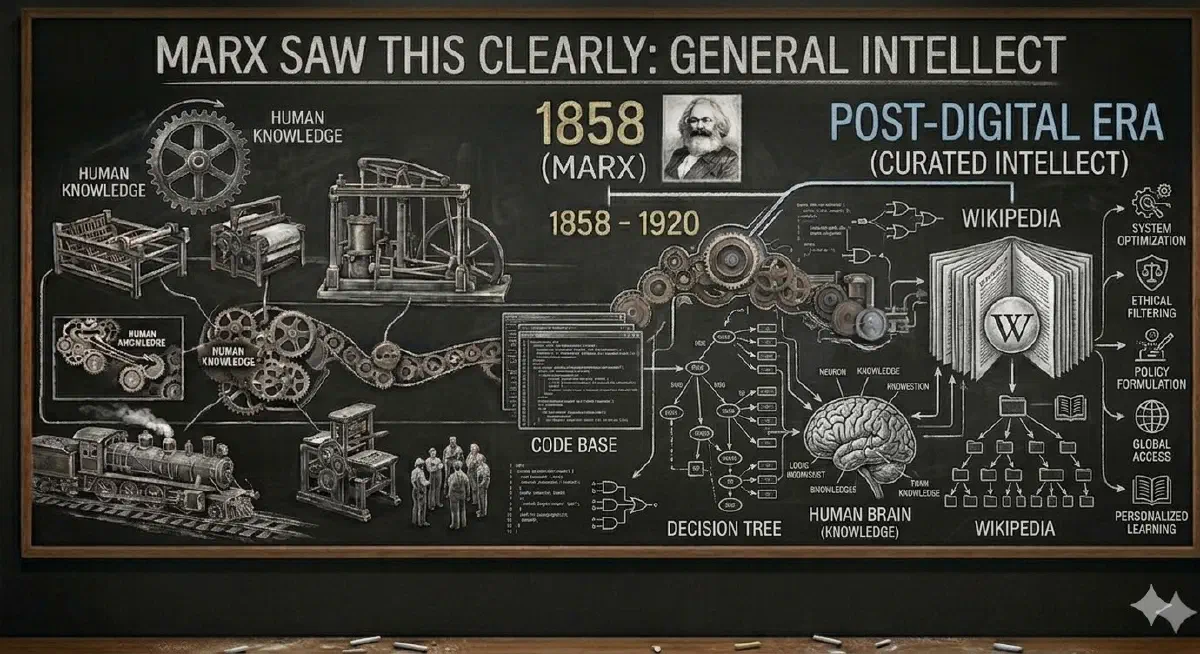
AI, capital, and the leverage you didn’t know you had
AI decoupled doing from learning. Every knowledge worker now faces a constant trade-off between the two. The ones who choose learning look slower today and become irreplaceable tomorrow.
AI accelerates the Peter’s Principle by letting people produce senior-level output without building senior-level understanding — creating a new class of ‘Senior Operators’ who have mastered the interface, not the craft.